
How to Choose Gold Coast Food Truck Catering for Your Event

Gold Coast food truck catering turns a menu into a moving attraction and keeps queues flowing when logistics are planned early. Trucks work well for festivals, sports meet-ups, informal receptions and casual corporate launches because they combine fast service with a social atmosphere.
What you need to know
Capacity rule: plan roughly one truck per 1500 guests for an 2 hours of continuous service and add trucks or staggered time slots for larger crowds.
Match the format: choose the truck type and service style (walk-up, pre-ticketed, plated, grazing) that fits your guest flow and event tone.
Menu trade-offs: single-serve items speed throughout but raise per-head costs; shareable portions lower waste and suit grazing setups.
Logistics checklist: confirm footprint, permits, power and water, queue space and arrival/service windows well before the event.
How Gold Coast food truck catering fits your event
Food trucks do best at casual, high-energy gatherings where quick service and a social atmosphere matter. Festivals, sports meet-ups, informal receptions and casual corporate launches benefit because guests can grab food on the go and lines usually move quickly. For plated formal dinners or venues that restrict mobile vendors, choose a seated caterer instead.
Estimate throughout by thinking in service windows. A quick-serve truck commonly delivers about 100 to 150 meals per hour, while plated or bespoke service can fall to 40 to 60 per hour. If you need most guests fed within a single hour, plan on roughly one truck per 80 to 120 guests; if service is spread over several hours, one truck can cover 150 to 200 guests overall.
Vendor style affects flow: single-station trucks work for focused menus and fast throughput, multi-station rigs or trailer kitchens suit high-volume events, and mobile vans are best for intimate or mobile service needs. Match the service format to guest behaviour — walk-up windows for lines, pre-ticketed slots for timed servings, plated delivery for seated meals and grazing stations for long networking events. Keep menu complexity low when speed matters.
Menu customization and sample menus to request
Design a menu that balances cost and impact by starting with portion control and clarity. Single-serve items speed service but increase per-head cost, while shareable portions can lower waste and suit grazing setups. Ask vendors for per-head portions, sample plating photos and notes on how protein swaps or veg-forward options change pricing.
Sample menus you can copy into quote requests. Use these three ready-to-send options to get accurate quotes from Gold Coast event food trucks and compare portion counts and pricing.
Festival quick-serve: mini tacos , loaded fries , bottled drinks (1 per guest).
Wedding canape/fry-bar: 3–4 bite items per guest plus one grazing table.
Corporate shareables: sliders, two sides per 3 guests, sauce pots (1 per 4 guests).
Common swaps and add-ons keep guests happy: gluten-free buns, vegan cheese, dessert fries and an on-site sauce bar are affordable options.
Branded boxes or a live pizza oven add theatre but increase prep time and often require extra staff, which typically raises costs by about 10 to 25 percent depending on complexity. Keep menu complexity appropriate to the event: festivals need 2 to 3 fast items, weddings can handle a curated 4 to 6 item experience, and corporate events suit shareable bundles.
Pricing benchmarks and how to compare quotes
Decide whether per-person pricing or a flat fee suits your event. Per-person pricing fits predictable headcounts and usually covers food and basic service, while flat fees work for fixed setups like a grazing station or a branded activation. Check local rates, minimums and what the price includes before you sign.
Extra charges can inflate a quote, so scan proposals closely. Look for travel and parking fees, generator or power hire, water supply and disposal charges, waste removal, crockery hire, GST and overtime or event surcharges, and ask vendors to itemise these costs.
Request a version of the quote that separates every fee so you can compare offers directly.
To compare quotes quickly, build a simple table with total price, price per head, inclusions (staffing, GST, supplies), setup time and cancellation terms. Confirm how final guest counts affect pricing and what the vendor does if numbers rise or fall. Check whether teams include contingency staffing and clarify overtime rates up front. For ballpark numbers and typical ranges, consult food truck catering cost benchmarks to set realistic expectations when reviewing quotes.
Event logistics: footprint, permits and setup
Start logistics with a venue checklist so nothing is left to chance. Typical truck footprints range from 4 to 9 metres long and 2.5 to 3 metres wide, plus an extra 3 to 4 metres for a safe service zone. Add a queue buffer of 4 to 6 metres and confirm a hard, level surface, a 3 metre access lane and a 7 to 8 metre turning circle for safe setup and pack-down. For more detail on recommended dimensions and common trailer layouts, review typical food trailer sizes.
Plan power and water early. A common power plan is a single 32 amp supply or two dedicated 15 to 20 amp circuits, and a 5 to 8 kVA generator is an alternative when mains power is unavailable. For water, request a potable point or allow 200 to 400 litres of onboard tank capacity for a half-day service and clarify greywater disposal rules with the venue. If you need further guidance on generator sizing and cable runs, see practical advice on electrical power needs for food trailers.
Permits and licences are required for mobile food businesses on the Gold Coast. The City of Gold Coast asks for a mobile premises food business licence and evidence of staff food safety training, so contact the environmental health team early to confirm site-specific rules and timelines. Councils can also advise on traffic management, waste disposal and temporary structure approvals, so allow at least four weeks for approvals when possible. See the City of Gold Coast guidance on the mobile premises food business licence and related requirements.
Venues often request proof of insurance and written permission before doors open, so ask vendors for a public liability certificate of currency (venue minimums commonly sit at $10 million), a copy of their food safety credentials and a list of what they will bring on arrival. Typical vendor-supplied items include power leads, waste bins and queue barriers. Confirm these items in writing well before the event.
Questions to ask, a vendor shortlist checklist and red flags
Get clarity on capacity and service assumptions before you shortlist vendors. Ask about throughput per hour, minimum spend, menu flexibility and whether the team can scale to your crowd. Always request a written quote that itemises fees and inclusions to avoid surprises.
What is your maximum capacity and typical throughput per hour?
Do you have sample menus and tasting options?
Can you accommodate substitutions and dietary requirements?
What licences and public liability insurance do you carry?
How many staff will attend and what roles do they perform?
What are your setup and pack-down times?
Do you have a minimum spend or guest count?
What are your deposit terms and cancellation policy?
How do you handle power, water and waste?
Will you provide references from similar events?
Do you itemise fees such as travel, parking or venue charges?
How do you manage weather or venue constraints?
Copy this compact checklist into emails when comparing vendors: price per head, minimum spend, included staff, setup time, footprint, power needs, waste plan, insurance, deposit amount and a sample menu link. Use the checklist to score vendors side by side so you can rank proposals objectively and spot gaps quickly.
Watch for these red flags: no insurance or licences, vague answers on capacity, unwillingness to provide references, or refusal to itemise fees. Be wary of unusually low quotes that lack detail, since they often hide extra charges.
Booking, confirmation and day-of tips plus a Fry-Yay mini case study
Begin booking confirmation with a clear run sheet that shows arrival and service windows, a final guest-count deadline, a simple layout map and a vendor contact list. Include power and water hookup points and a waste pickup plan so everyone knows their responsibilities. Clear run sheets reduce last-minute confusion and keep queues moving.
Be explicit about deposits, cancellations and final payments in writing. A common arrangement is a 25 to 30 percent deposit on booking, the final invoice due 7 to 14 days before the event, and additional charges for late guest count increases or extended service windows. Ask vendors about their refund and transfer policies and confirm payment methods up front.
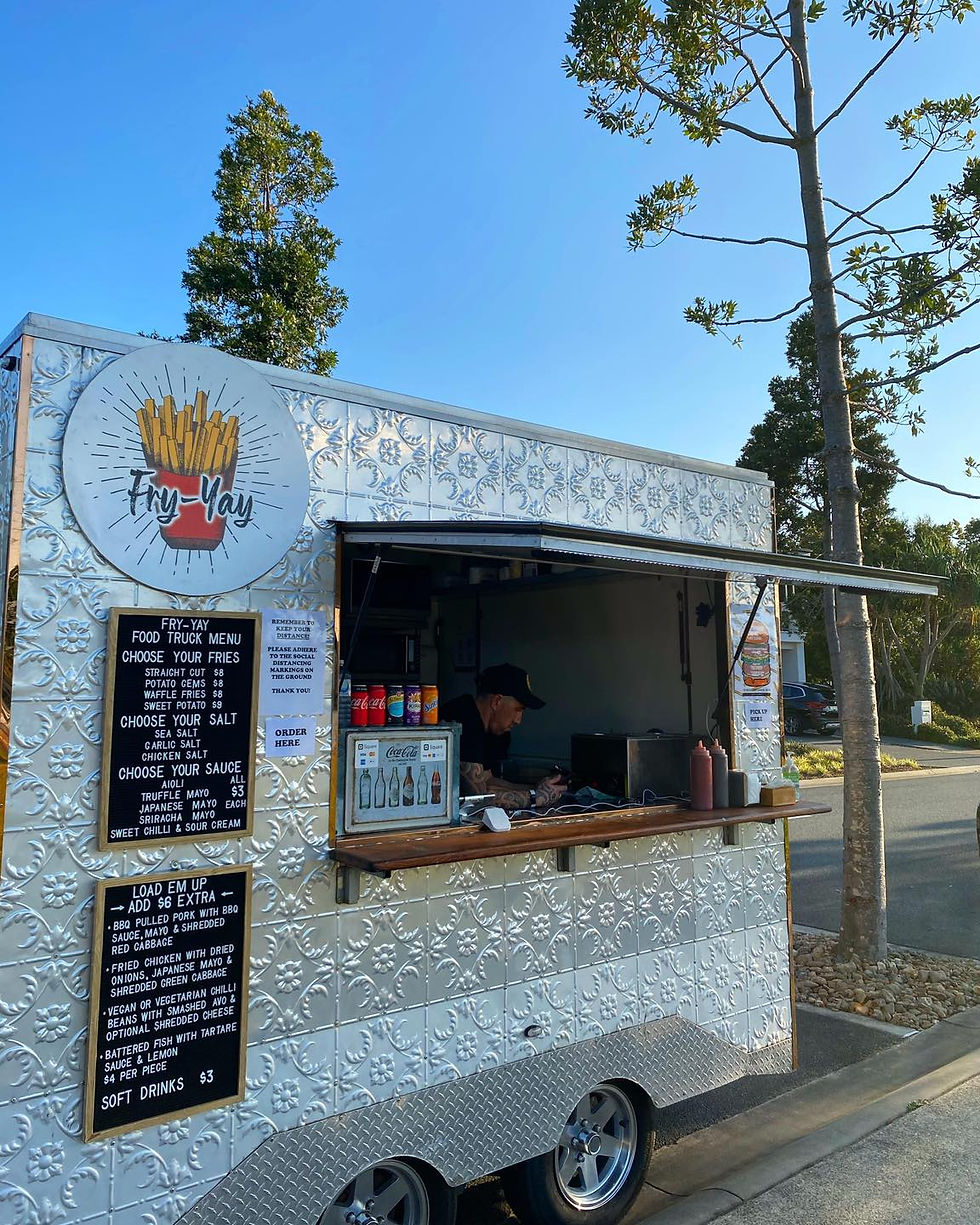
On the day, stick to the run sheet and keep communications tight between venue, truck and planner. At a recent festival Fry-Yay used service windows across three time blocks and kept average queue times to about 10 minutes. For a private birthday Fry-Yay served a loaded-fries menu to 120 guests in 90 minutes by confirming footprint, prep staging and a single point of contact.
Next steps: use the sample menus and the shortlist checklist to request quotes, confirm licences and insurance with each vendor, and lock in your run sheet at least seven days before the event. Gold Coast food truck catering becomes reliable when you plan logistics and ask the right questions. Contact Fry-Yay Food Truck for sample menus or a tailored quote for your event date.
Choose the right Gold Coast food truck catering
Choosing a Gold Coast food truck catering partner means checking whether the format suits your event, whether the menu can be tailored and whether the quote matches your value expectations. For casual, high-energy gatherings you get faster service and a social atmosphere that plated catering cannot match. When comparing options, prioritise menu customization that balances portions and impact and clear pricing benchmarks so you know what you are paying for.


I notice that the interpretations avoid overreach and remain grounded. The reasoning does not outpace the supporting data. The website provides a richer contextual backdrop for the problem. Adoption indicators are grounded in interactive digital frameworks.